
The center of our faith, the center of our week.
Our worship is intergenerational, radically inclusive, and open to everyone
Worship at Indianola
Down-to-earth | Casual | Traditional | Contemplative | Creative
IPC's worship service is filled with beautiful historic and contemporary music and inspiring, relevant messages for all ages.
Each week we reconnect with God and one another through song, prayer, art, and scriptural reflection & dialogue.
We believe faith is something best practiced and shaped in community
and that worship is the best laboratory we have for God to shape us and allow us to experiment with and grow in faith!
Sundays at 10:30 am

Sunday Worship
Join us at 10:30am for worship and community.
Parking is available across the street in our lot.

Online Worship
Watch Live or Anytime On Youtube or Facebook
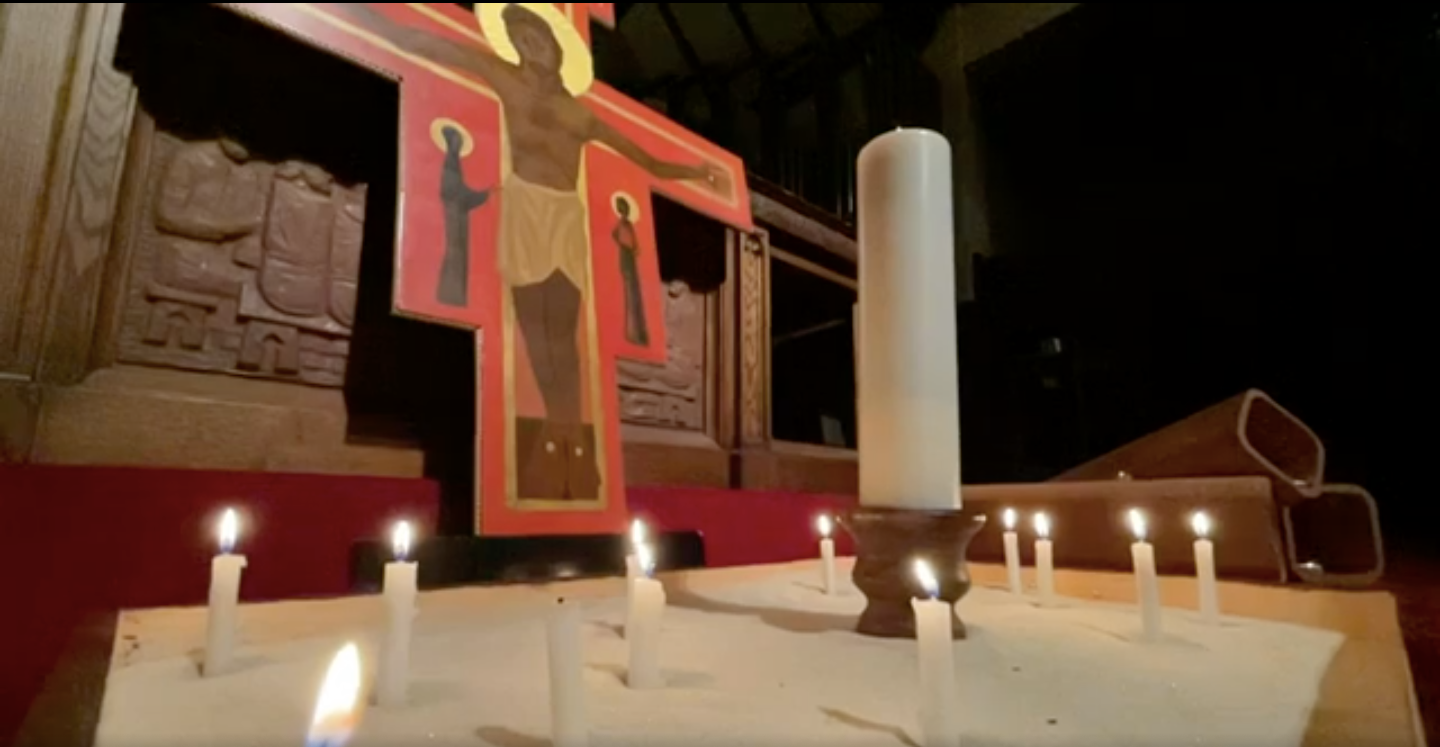
Our sanctuary and worship format leans a bit “traditional,”
but you will always find here:
- rich, spirit-filled music drawing from contemporary & historic sources -
- a relevant scriptural message steeped in liberation theology as well as the reformed tradition -
- a radically warm, welcoming, and inclusive community -
- a place to “come-as-you-are” -


Kids of all ages are always welcome to join parents in the sanctuary for all parts of worship on Sunday. God put the wiggles in children, don’t feel you have to suppress it in God’s house. All kids are invited to come down for a special message just for them before the sermon.
For younger kids and nursing parents
At the back of our sanctuary is our Kid’s Carpet with rockers, toys, books, coloring materials and plenty of space for ambitious crawlers and wandering toddlers.
For older kids
At the front of the sanctuary are our Kid’s Table, stocked with activities to engage kids in worship. Parents are encouraged to sit in the front pew and continue to help your child worship.
Kids in Church!
- Worship This Sunday -
October 11, 2026
Indianola Presbyterian Church
“In the Wilderness of life”
Sermon by Rev. Trip Porch
October 11, 2026 Based on Exodus 19:3-7; 20:1-17
I’ve found it hard to write a sermon on this text this week, mainly because just about five weeks ago, we were wrapping up a series on the Ten Commandments where I preached on this exact text for four weeks. What more can one person say about the Ten Commandments?
As I sat with it, I realized that most of the series we did this summer zoomed in on the details of these verses, on how God has ordered the world in particular ways… And how we might understand these commandments to be a part of God’s liberation of the people.
But maybe, in this series about the long faithfulness of God, there is something different we see when we zoom out. When we look at how this story fits into the grand scheme of God's covenant relationship with humanity.
Because the Ten Commandments don't appear in a vacuum. They come in the middle of a much bigger story.
We began with Abram, whom God called to leave what was familiar and go toward a place God would show him. God promised that through Abram, all the families of the earth would be blessed.
Then we met Joseph, whose life took him far from home, through the ups and downs of betrayal and imprisonment, before he eventually became a source of survival for his family and many others.
Last week, we stood with the Israelites at the edge of the sea. We remembered how they had been enslaved in Egypt, and how God made a way through the water when there seemed to be no way forward. They walked out of slavery and into freedom.
And now, here they are, in the wilderness. They have escaped Pharaoh, but they have not arrived in the land God promised. They are somewhere in between. They have left behind the only life most of them have ever known, but they cannot yet see what their new life will look like.
And it is here, in the wilderness, that God brings them to Mount Sinai. God says to Moses, “You have seen what I did to the Egyptians, and how I lifted you up on eagles’ wings and brought you to myself.”
Before God gives the people anything to do, They are reminded of what God has already done.
“I brought you out. I carried you here.
I have not abandoned you.”
And then God gives them the commandments.
We know these commandments. We have spent a lot of time with them recently. But this morning, I want us to notice something about their place in the story.
God does not give the commandments to the Israelites while they are still enslaved in Egypt, as a condition they must meet to earn their freedom. God gives them after they have been liberated, while they are still in the wilderness, before they have arrived at the place God is sending them…That order matters.
The commandments are not the price of admission to God's love. They are part of how God teaches a newly liberated people to live. Because getting people out of Egypt is one thing. Getting Egypt out of the people is another.
Think about what the Israelites have known. Egypt was a system built around centralized power… Pharaoh’s power. Pharaoh decided what mattered, how much people had to produce, and who would bear the cost. The people at the bottom existed to serve the interests of the person at the top. Their labor could be taken. Their lives could be treated as expendable. Their worth was measured by what they could produce.
When God brings the Israelites out of Egypt, God frees them from that system. But freedom from a system does not automatically free us from everything that system has taught us. The Israelites still have to learn another way. And that is why God meets them in the wilderness.
We tend to think of the wilderness as the obstacle in the story, the hard stretch between slavery and the Promised Land. It is the part they have to get through before life can really begin.
But what if the wilderness is not just the part they have to get through? What if it is where the real work of becoming God's people happens? Here, they have to learn how to live on their own without Pharaoh telling them what to do. They have to learn how to make decisions together, how to share resources, how to deal with conflict, how to care for one another when there isn't enough certainty or security to go around.
They have to learn that freedom is more than the absence of someone controlling you. Freedom also means learning how to live together without recreating the same patterns of domination and exploitation you just escaped.
That is what the commandments begin to teach them. They give shape to a different kind of community. A community where there are limits on what one person can take from another. Where a neighbor's life and dignity matter more than personal advantage. Where rest is not reserved for preparing you to work for Pharaoh, but extends to workers, immigrants, children, and even animals because they are worthy of it.
Imagine what the Sabbath commandment must have sounded like to people who had spent generations making bricks for someone else's empire. The God who liberated them now tells them that their lives will not be defined by endless production. That they will stop. Their families will stop. The people who work for them will stop. Even their animals will rest.
This is a radically different vision of what a community can be. God is not simply telling the Israelites how to behave. God is teaching them how to build a society that does not become Egypt all over again.And notice where this happens. Not after the Israelites have arrived in the Promised Land. Not after they have figured everything out. Here. In the wilderness.
We often imagine the Exodus as a journey with a satisfying ending. The people are enslaved. God liberates them. God gives them the commandments. Eventually, though it may take some time they arrive in the Promised Land. The story is complete. But the biblical story is much more complicated than that.
The Israelites do eventually enter the land, according to the biblical narrative. But the land is already inhabited, and the story of God’s people arriving there includes conflict and displacement. Even after settling there, God's people struggle with injustice, experience the rise and fall of kingdoms, and eventually face exile from the land.
There is no simple, permanent arrival at a place where everything is finally right. The Promised Land is a real place in the biblical story, but it is also bound up with a promise about the kind of life God desires for God's people. And the story keeps revealing the distance between that promise and the reality of how people actually live.
The people keep needing to learn. They keep needing to change. They keep needing to return to the God who calls them toward something better. Maybe we have been thinking about the wilderness backward. Maybe it isn't simply the place between the life we had and the life we hope to have. Maybe it is where most of life actually happens. Because we know what it is like to live in that distance between the world as it is and the world as we believe it could be.
We work for a more just society, but injustice persists. We build communities where people belong, but loneliness remains. We make progress, only to discover how much work is left to do. We experience real victories without arriving at a world where everyone is safe, everyone has enough, and everyone is treated with dignity.
And sometimes we get discouraged. We wonder whether all our work is making a difference. We wonder whether the future we hope for is actually possible.
Our faith does not promise that history will automatically get better. People can make progress, and people can undo it. Structures that once protected the vulnerable can be dismantled.
Power can become concentrated in the hands of a few. The future is not guaranteed to bend toward justice simply because we want it to. But the story of Exodus gives us another reason to hope.
God does not wait for the Israelites to reach the Promised Land before beginning the work of forming them. God meets them in the wilderness. God gives them a way to live that makes the promise more visible in the present, even when its fullness remains far away.
God has not abandoned the world as it is. God is still calling us toward the world as it could be. I think that matters a great deal in the moment we are living through.
Many of us are deeply troubled by the direction of our country. We see power becoming concentrated. We see people treated unjustly. We worry about what happens when the needs and dignity of human beings become secondary to the interests of those who hold power.
And as we approach an election, of course, we have an opportunity to participate in shaping the structures that govern our common life. We can vote according to our conscience. We can organize, advocate, and make our voices heard. We can work to change who holds power and how that power is used. Those things matter. They can change laws, protect people, and open possibilities that once seemed closed. We should never underestimate what political change can mean for the lives of real people.
But no election, even one that brings profound and necessary change, will finally deliver us into a promised land.
No single moment brings us into a world where the work of justice is finished. There will still always be the work of learning how to live together. There will still always be the work of building institutions that protect the vulnerable. There will still always be the work of making sure that people who have been overlooked are heard, that power has limits, and that everyone has a place in the community. There we will still be in the wilderness.
And that is not a reason to give up. It is a reason to understand what faithfulness asks of us.
If we imagine that the whole point is to get rid of one Pharaoh, we may fail to ask the harder question: How do we build a community in which no one gets to be Pharaoh?
If we imagine that justice will arrive when the right people are elected, we may miss the daily work of practicing justice with the people around us. Changing the structures that govern our lives is essential. But we must also keep asking what those structures are for, whose lives they protect, and what kind of community they help us become.
That question belongs to the church, too. We can talk about a world shaped by God's love, but do our own practices make room for people who are vulnerable? Do we share power? Do we make space for rest? Do we listen to people who have been ignored? Are we willing to change when our familiar ways of doing things no longer serve the people God has called us to love?
We do not have to be a perfect community to be a faithful one. But we do have to keep learning.
We have to keep asking whether the way we live together is moving us closer to the world God dreams of.
Because the commandments were given to a people who were still becoming. And so are we.
And this is where I find hope in the wilderness. Not because the wilderness is easy. Not because suffering and uncertainty are somehow good for us. God did not liberate the Israelites from slavery because slavery was a useful learning experience. God heard their cries and brought them out. The hope is not that we should become comfortable with injustice or learn to accept the world as it is. The hope is that the world as it is does not have to be the world as it will always be.
Perhaps the Promised Land is not where most of us will spend our lives. Perhaps it is the vision that keeps us moving. The glimpse of a world where everyone has enough, where people are treated with dignity, where power serves rather than exploits, and where no one is left to suffer simply because someone else has decided they do not matter.
We may never see that world in its fullness. But we can help make it more real. We can make our communities a little more just than they were yesterday. We can build structures that protect people rather than use them. We can make room for rest in a world that demands endless productivity. We can refuse to accept that the way things are is the only way things could be. We can make the wilderness a little more hospitable for the people walking through it with us.
And we can trust that God is not finished with us or with the world.
The wilderness is where most of us will live in this life. It is where the good work happens.
It is where God is forming us into a people who can practice the life we hope for, even before we see it fully realized.
So may we keep our eyes on the vision God sets before us. May we keep our feet moving, our hearts open, and our hands busy with the work of justice and love.
We may not see the whole journey. We may not reach the place we imagined. But the future is not finished. God is still moving, still calling, still making a way.
And what we do here, today, in this wilderness, matters.
Amen.
WE GATHER IN AWE AND PRAISE
*indicates stand if you are able
PRELUDE Diapason Dialogue Gordon Young
The Sacred Music Press © 1969
INTROIT “Be Still and Aware of God’s Presence” Sally Ann Morris Be still and aware of God’s presence within and all around. text: John Philip Newell
WELCOME Rev. Trip Porch
One: This is the day that the Lord has made
All: Let us rejoice and be glad in it.
*CALL TO WORSHIP
One: Come, all who are weary from the world’s demands.
All: Come, all who long for a world made whole.
One: Come, all who carry questions about what is possible,
All: Come all who wonder what part we might play.
One: We gather before the God who makes a way where there seems to be no way.
All: Let us open our hearts to God’s presence.
*HYMN 81 “Glorious Things of Thee Are Spoken” AUSTRIAN HYMN
*PRAYER OF CONFESSION Amy Brown
Merciful God, we confess that we have valued productivity over rest, comfort over compassion, and our own interests over the well-being of our neighbors. We have accepted the way things are when you call us toward something better, and we have forgotten that our choices shape the lives we share. Forgive us and turn us again toward your love. Give us courage to change, patience to build, and wisdom to live together in ways that bring healing and hope. Amen.
*ASSURANCE OF PARDON
*RESPONSE OF PRAISE 659 “Know That God Is Good” MUNGO NI MWEMA
*PASSING OF THE PEACE
One: The peace of our Lord Jesus Christ be with you all,
All: And also with you
WE LISTEN FOR GOD’S WORD
ANTHEM “On Eagles Wings” Michael Joncas
GODLY play
Congregation: May God be with you there
Children: May God be with you here.
CHILDREN’S RECESSIONAL 175 “Seek Ye First” vs. 1
PRAYER FOR ILLUMINATION
SCRIPTURE Exodus 19:3-7; 20:1-17 CEB
“Israel camped there in front of the mountain while Moses went up to God; The Lord called to him from the mountain, “This is what you should say to Jacob’s household and declare to the Israelites: You saw what I did to the Egyptians, and how I lifted you up on eagles’ wings and brought you to me. So now, if you faithfully obey me and stay true to my covenant, you will be my most precious possession out of all the peoples, since the whole earth belongs to me. You will be a kingdom of priests for me and a holy nation. These are the words you should say to the Israelites.” So Moses came down, called together the people’s elders, and set before them all these words that the Lord had commanded him.
“Then God spoke all these words: I am the LORD your God who brought you out of Egypt, out of the house of slavery. You must have no other gods before me. Do not make an idol for yourself—no form whatsoever—of anything in the sky above or on the earth below or in the waters under the earth. Do not bow down to them or worship them, because I, the LORD your God, am a passionate God. I punish children for their parents’ sins even to the third and fourth generations of those who hate me. But I am loyal and gracious to the thousandth generation of those who love me and keep my commandments. Do not use the LORD your God’s name as if it were of no significance; the LORD won’t forgive anyone who uses his name that way. Six days you may work and do all your tasks, but the seventh day is a Sabbath to the LORD your God. Do not do any work on it—not you, your sons or daughters, your male or female servants, your animals, or the immigrant who is living with you. Because the LORD made the heavens and the earth, the sea, and everything that is in them in six days, but rested on the seventh day. That is why the LORD blessed the Sabbath day and made it holy. Honor your father and your mother so that your life will be long on the fertile land that the LORD your God is giving you. Do not kill. Do not commit adultery. Do not steal. Do not testify falsely against your neighbor. Do not desire and try to take your neighbor’s house. Do not desire and try to take your neighbor’s wife, male or female servant, ox, donkey, or anything else that belongs to your neighbor.”
One: Holy Wisdom
All: Holy Word
SERMON Rev Trip Porch
WE RESPOND TO GOD’S WORD
*HYMN INSERT “This Holy Covenant Was Made” LASST UNS ERFREUEN
PRAYERS OF THE PEOPLE followed by the Lord’s Prayer
TIME OF OFFERING online giving is available at www.indianolapres.org/give
OFFERTORY Largo, molto cantabile J. S. Bach
International Music Company, NY
*OFFERTORY RESPONSE 748 “Go With Us, Lord” TALLIS’ CANON
*PRAYER OF DEDICATION
Generous God, May everything we offer become part of your work of making all things new. Use what we offer to shelter those who need protection, to create places of belonging, to pursue justice, and to make your love tangible in this world. Teach us to be faithful not only with what we possess, but with the power and responsibility we have been given. Amen
*HYMN 546 “Lord Dismiss Us with Your Blessing” SICILIAN MARINERS
TIME OF COMMUNITY SHARING
CHARGE & BENEDICTION
BENEDICTION RESPONSE " Amen Siakudumisa " S.C. Molefe; text: South African
POSTLUDE “Heavenly Sunlight” G. H. Cook/arr. Mark Hayes
Alfred Music Publishing Co. © 2003
Acknowledgments: Unless otherwise indicated, all texts and music are printed and broadcast under OneLicense.net license #A-702452
